


The 5 Teas That Actually Help You Sleep (Ranked by a Herbalist)
A better night can begin with one small ritual.
Not a complicated sleep protocol. Not another wellness chore. Just a warm, caffeine-free cup that helps signal to your body: the day is done.
But which teas genuinely support sleep: and which ones are simply marketed as “sleepy”?
We ranked five popular herbal teas using current research, traditional herbal practice, and one important reality check: tea can support relaxation and sleep quality, but it is not a cure for chronic insomnia.
The Sleepy Tea Shortlist
Here is the quick ranking:
- Valerian root : the most studied for sleep support
- Lavender : best for a busy, anxious mind
- Chamomile : gentle, classic, and soothing
- Passionflower : promising for restlessness
- Lemon balm : ideal for stress and nervous digestion
The effects are generally modest. Think gentle support, not a sedative. The real magic often comes from the combination of calming botanicals, a screen-free pause, and a consistent bedtime routine.
Herbalist’s note: Much of the research studies concentrated extracts, capsules, or aromatherapy: not tea alone. Tea is best viewed as an accessible evening ritual that may complement healthy sleep habits.
1. Valerian Root: The Restful Root
Best for: difficulty falling asleep and feeling “tired but wired.”
Valerian root takes the top spot because it is the most extensively studied herbal sleep ingredient on this list.
Research suggests valerian may help some people fall asleep more easily, wake less often, and experience improved subjective sleep quality. The results are not perfectly consistent, but the signal is stronger than it is for many other sleep herbs.
Valerian is traditionally used as a calming nervous-system herb. It is especially appealing when your body feels exhausted but your mind refuses to power down.
What to know:
- Often enjoyed 30–60 minutes before bed
- Has an earthy, distinctive flavour
- May cause grogginess, vivid dreams, or mild stomach upset in some people
- Avoid combining it with alcohol or sedative medications without professional guidance
Valerian is the key sleep-support botanical in Tease Tea’s Golden Slumbers blend. The result is a more approachable bedtime infusion, balanced with naturally caffeine-free rooibos, peppermint, and citrus notes.

2. Lavender: Calm for a Busy Brain
Best for: bedtime worry, tension, and racing thoughts.
Lavender is less about “knocking you out” and more about helping you soften the edges of the day.
Clinical research is strongest for standardized lavender oil and aromatherapy. These studies suggest lavender may reduce anxiety and improve sleep disturbance related to stress. Evidence for lavender tea specifically is more limited: but the ritual remains beautifully aligned with its traditional use.
A cup of lavender tea can be especially helpful when your sleep struggle sounds like:
- “I cannot stop thinking about tomorrow.”
- “My body is tired, but my mind is still working.”
- “I need a gentler transition into rest.”
Lavender pairs well with chamomile, lemon balm, and other soothing herbs. Its floral aroma also makes the bedtime experience feel elevated. A little attainable luxury, poured into a cup.
3. Chamomile: The Classic Cup of Calm
Best for: gentle relaxation, mild sleep disruption, and digestive tension.
Chamomile is popular for good reason. It is naturally caffeine-free, widely available, and pleasantly soft in flavour.
It contains apigenin, a plant compound studied for its interaction with GABA-related pathways involved in relaxation. Reviews suggest chamomile may improve overall perceived sleep quality, although evidence for treating diagnosed chronic insomnia remains limited.
Chamomile is particularly lovely when your sleep feels connected to:
- Evening stress
- A tense stomach
- Restlessness
- A need for a familiar, comforting ritual
Steep one tea bag for 5–10 minutes. Enjoy it slowly. Let the warmth, aroma, and pause do some of the work.
A note of care: If you are allergic to ragweed or other plants in the daisy family, chamomile may not be the right choice. It can also interact with some medications, including blood thinners. When in doubt, ask your healthcare provider.
4. Passionflower: For Restless Evenings
Best for: mental overstimulation and anxious restlessness.
Passionflower has a smaller research base than valerian, lavender, or chamomile. Still, early studies are encouraging.
One small clinical trial found that passionflower tea improved self-reported sleep quality in healthy adults. Other research has suggested possible improvements in total sleep time, though not every sleep measure improved.
Traditionally, passionflower is used when the nervous system feels overactive. It may suit you if your evening includes plenty of mental scrolling, second-guessing, or emotional processing.
Passionflower is often blended with chamomile, lemon balm, or valerian. Its flavour can be a little grassy, so combining it with brighter botanicals creates a more enjoyable cup.
Keep it intentional: Long-term safety data are limited. Avoid combining passionflower with strong sedatives, and speak with a qualified healthcare professional if you are pregnant, breastfeeding, or taking medication.
5. Lemon Balm: Soft Support for Stress
Best for: stress, nervous digestion, and gentle evening unwinding.
Lemon balm lands at number five: not because it is ineffective, but because its direct sleep research is thinner.
Its strongest reputation is as a calming herb that may help reduce stress and tension. Many studies examine lemon balm in combination with other botanicals, particularly valerian. That makes it a beautiful supporting ingredient in a bedtime blend, even if it is not the strongest solo sleep herb.
Lemon balm is fresh, lightly citrusy, and easy to enjoy. Reach for it when your sleep disruption feels connected to:
- A nervous stomach
- Everyday stress
- Low-level worry
- Difficulty transitioning out of “doing” mode
It is the kind of herb that supports a ritual without demanding attention. Bright enough to taste lovely. Gentle enough for evening.
The Herbalist’s Sleep Tea Ranking, At a Glance
| Tea | Best suited for | Evidence snapshot |
|---|---|---|
| Valerian root | Trouble falling asleep and frequent waking | Most studied; benefits are modest and inconsistent |
| Lavender | Anxiety and racing thoughts | Stronger evidence for standardized oil and aromatherapy than tea |
| Chamomile | Mild sleep issues and relaxation | Some support for sleep quality; limited evidence for chronic insomnia |
| Passionflower | Restlessness and overstimulation | Promising early studies, but a smaller evidence base |
| Lemon balm | Stress and nervous digestion | Better supported for calming than for sleep alone |
For a deeper overview of herbal sleep research, see this systematic review of herbal medicines for insomnia. The Sleep Foundation’s guide to teas for sleep also offers a helpful overview of common bedtime botanicals.
Why Golden Slumbers Is a Beautiful Place to Begin
A good sleep ritual should feel easy to return to.
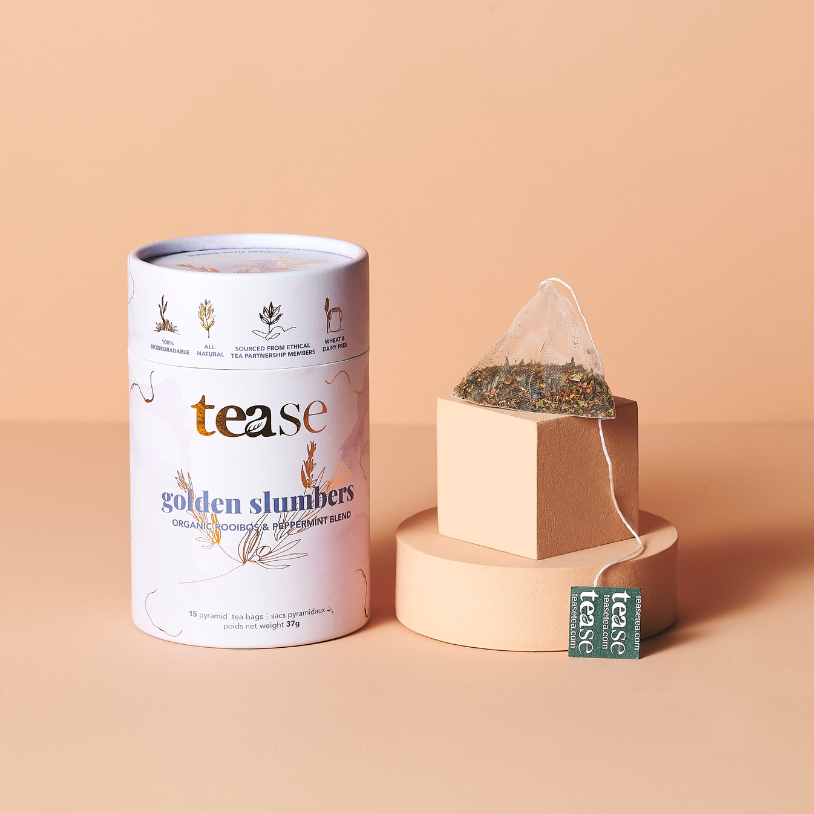
Golden Slumbers is a caffeine-free, organic blend created for evening relaxation. It brings together valerian root with a mellow rooibos base, peppermint, and citrus notes for a soothing cup that feels more like a ritual than a remedy.
The essentials:
- ✔️ Caffeine-free
- ✔️ Organic tea blend
- ✔️ Pyramid tea bag designed for a deeper infusion
- ✔️ 15 tea bags per tube
- ✔️ Natural ingredients with no artificial flavours, sugars, preservatives, or sweeteners
- ✔️ 100% biodegradable, plant-based tea bags
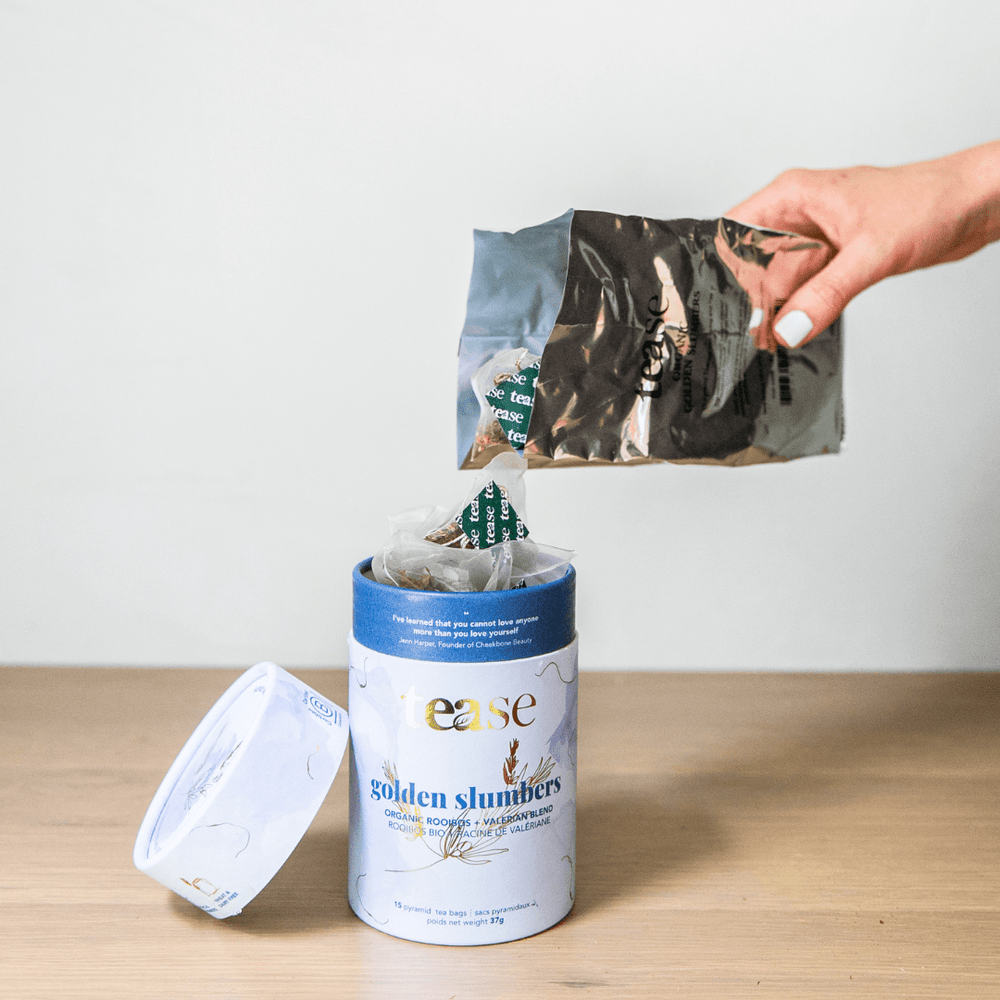
- ✔️ Refillable packaging designed to reduce waste
At the time of research, the Golden Slumbers refill displayed a 4.9/5 rating from 170 reviews: a reassuring sign that this bedtime ritual has become a favourite for many tea drinkers.
How to Build Your Own Sleep-Support Ritual
The tea matters. So does the moment around it.
Try this simple wind-down:
- Steep one tea bag for 5–7 minutes.
- Dim the lights while your tea brews.
- Put your phone away or switch it to sleep mode.
- Sip 30–60 minutes before bed.
- Repeat consistently, even when the ritual is brief.
For a more indulgent version, try Tease Tea’s easy sleep-support tea latte recipe with oat milk, maple syrup, and cinnamon.
Small ritual. Softer landing.
Sleep Well. Tread Lightly.
Your bedtime ritual should care for more than your nervous system.
Tease Tea’s pyramid tea bags are fully biodegradable and plastic-free. The tubes are refillable. The formulas use natural ingredients. Every choice is designed to make wellness feel more aligned with your values: not separate from them.
That means a better cup for you and a lighter footprint for the planet.
Explore the Tease Tea sleep-support collection, then choose the blend that matches your kind of evening.
One cup. One pause. One softer way to close the day.
A final note: Herbal tea may support relaxation and sleep quality, but it cannot replace medical care. If sleep problems persist, affect your daytime life, or involve loud snoring, breathing pauses, or severe daytime sleepiness, speak with a healthcare professional. For ongoing insomnia, cognitive behavioural therapy for insomnia: CBT-I( is considered a first-line treatment.)


